Loading...
Serving Abilene, TX and surrounding areas. (325) 283-1765
Serving Abilene, TX and surrounding areas. (325) 283-1765
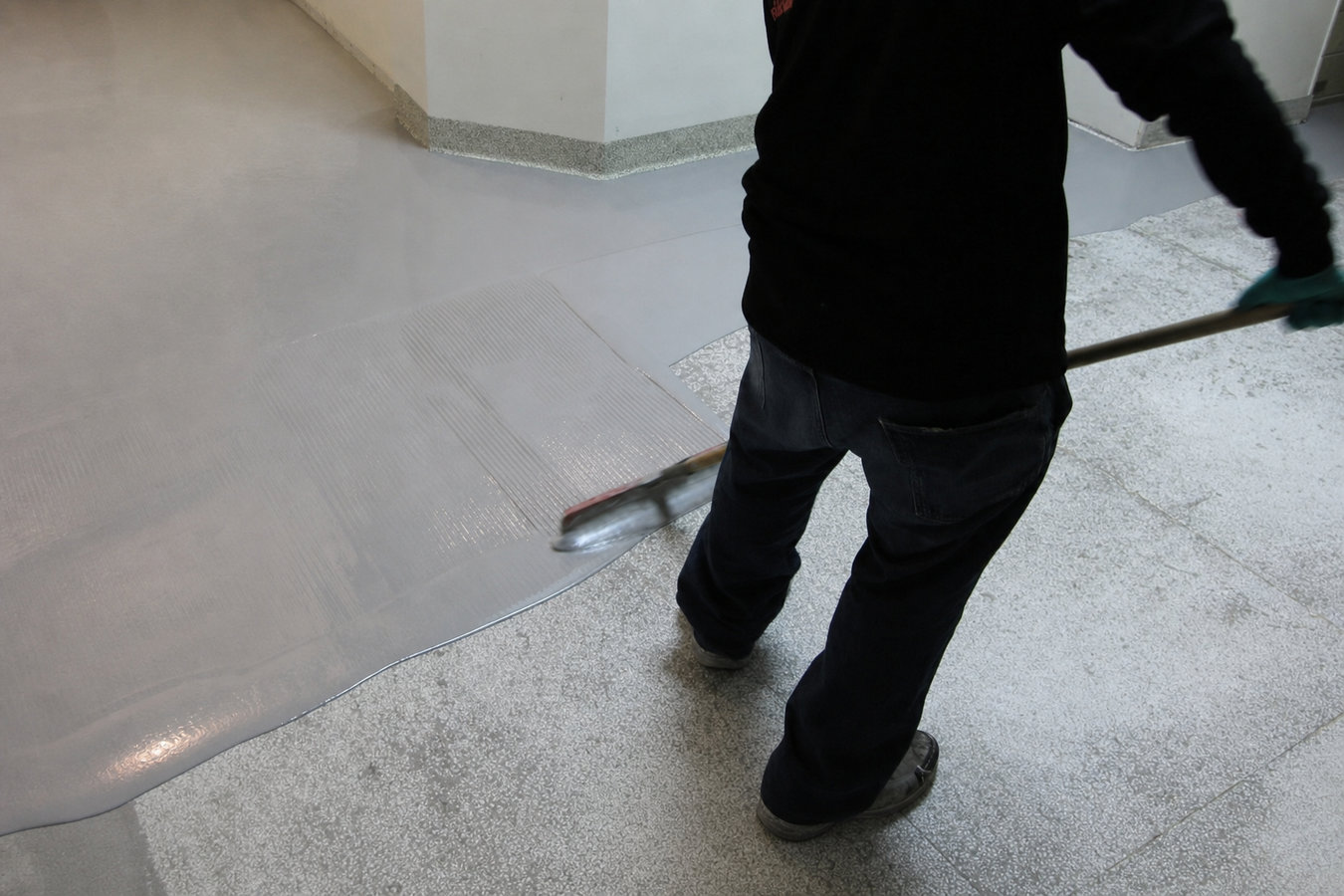
Uneven floors, dips, and cracked tile are common in Abilene homes. We pour a self-leveling mix that finds its own level, giving you a flat, solid base ready for new flooring or a finished surface.
Self-leveling concrete in Abilene is a specially mixed material poured over an existing uneven floor - it flows across the surface and settles flat on its own, correcting dips, slopes, and humps without tearing out the slab, and most residential pours are walkable within a few hours and fully ready for new flooring within 24 to 48 hours.
If your floor has developed a noticeable tilt, if tile keeps cracking in a line, or if you are planning to install new flooring and the subfloor is not flat, a self-leveling pour is the clean solution. Abilene's clay soil expands and contracts with every wet and dry cycle, and that movement causes slabs to settle unevenly over time - particularly in homes built in the 1950s through 1970s when slabs were poured thinner. Once the floor is level, many homeowners add a decorative finish or proceed directly to new tile or vinyl plank installation. If the floor also has visible surface wear or staining, a concrete overlay applied on top of the leveled base can refresh the appearance entirely - similar to what we do with concrete resurfacing and overlays for exterior slabs.
Not every uneven floor is a good candidate for a pour. If the slab underneath is still actively moving, we will say so - covering up a moving slab is money wasted, and we would rather tell you that upfront than have the work fail.
If furniture rocks slightly, a ball rolls on its own, or you feel a subtle tilt underfoot, your floor has likely developed an uneven surface. In Abilene, this is often caused by the clay soil underneath the slab expanding and contracting through wet and dry seasons over many years. Self-leveling concrete is designed specifically to correct this kind of gradual unevenness.
When tiles crack in a line or start to pop up from the floor, it usually means the surface underneath has shifted. This is a common sign in older Abilene homes where the original slab has settled unevenly. Replacing the tile without first leveling the floor will result in the same problem repeating within a few years.
Vinyl plank, hardwood, and tile all require a flat surface to install correctly - if the floor underneath has dips or humps, the new flooring will flex, squeak, or crack at the joints. A self-leveling pour before installation gives your new floor the best possible foundation and protects your investment in new materials.
When a slab shifts, the effects sometimes show up in ways that are not obviously floor-related - doors that suddenly stick, gaps opening between the baseboard and the floor, or cabinets that no longer sit flush. In Abilene's clay-soil environment, these are often early signs that the slab has moved and the floor surface has become uneven as a result.
Every job starts with a measurement of the floor's high and low points so we can match the right pour thickness to your specific situation. Standard pours run between one-quarter inch and one-and-a-half inches thick - the thicker the pour, the more material is used and the higher the cost, but some floors require it. For interior slabs that are structurally sound but have surface wear, we also offer thin concrete overlays that can be applied after leveling, giving the floor a clean, finished look. When the finished surface will be used as a final floor rather than a subfloor base, decorative options including color and texture are available. If an exterior slab needs similar surface work, our concrete resurfacing and overlays service handles driveways, patios, and outdoor slabs.
Surface preparation is the step that determines whether a self-leveling pour bonds and lasts. We grind the floor first to roughen the surface so the new material grips, fill any existing cracks, apply a primer coat, and check moisture levels - especially important in older Abilene homes where moisture can wick up through the slab. The American Concrete Institute provides guidance on floor slab construction and prep standards that we follow on every project. Skipping prep is how self-leveling jobs fail - delamination, hollow spots, and surface cracking are almost always the result of rushed or skipped preparation, not the product itself.
The right choice for floors with dips, slopes, or uneven settling that need a flat base before new tile, hardwood, or vinyl plank is installed.
Suited to floors that are already roughly flat but have a worn, rough, or pitted surface that needs to be refreshed without adding significant height.
A good fit for garage floors, utility rooms, and finished interior spaces where the overlay will serve as the final visible floor surface rather than a base layer.
Ideal when a floor needs both correction and a fresh appearance - the self-leveling pour fixes the unevenness first, then a decorative or protective overlay is applied on top.
Abilene sits on Taylor County clay soils that shrink and swell with every change in moisture. Wet winters expand the soil, dry summers shrink it back - and that repeated movement is the leading reason why slab floors in this area develop uneven surfaces over time. A significant share of Abilene's residential neighborhoods, including areas around Elmwood and South 14th Street, were built in the 1950s through 1970s. Slabs from that era were poured thinner than modern standards and with less reinforcement, making them more prone to settling and unevenness after decades of West Texas weather. If your home is more than 40 years old, there is a reasonable chance at least one floor has developed a noticeable dip or slope that you have learned to live with. Homeowners in Tuscola and surrounding communities face the same conditions and have the same need for contractors who understand what Abilene's soil does to older slabs.
Abilene's summers also create real challenges for scheduling. Self-leveling material can set faster than intended when temperatures climb above 100 degrees F, which causes cracking or an uneven finish if the pour is not managed carefully. Experienced local contractors schedule summer work for early morning and take steps to control the temperature of the work area. Winter pours carry a different risk: Abilene's low indoor humidity when heating systems run can cause surface crazing - fine cracks on the surface of a fresh pour - if humidity is not monitored. Homeowners near Lawn and across the region benefit from working with a contractor who knows these local conditions and plans around them rather than ignoring them. The American Society of Concrete Contractors recommends climate-adapted scheduling and curing practices for exactly these kinds of conditions.
Tell us what room or rooms are involved, roughly how large the area is, and what you are noticing. We ask a few questions to figure out whether a site visit is needed and what to look for when we get there. Most Abilene homeowners can have an estimate scheduled within a few days.
We visit your home to measure the floor, check how uneven it is, and look at the condition of the existing surface. We check for cracks, moisture, and whether the slab appears stable - especially important given Abilene's clay soil. You receive a written estimate that breaks down prep, materials, and labor so you know exactly what you are paying for before anyone picks up a tool.
Before the crew arrives for the pour, you remove everything from the room - furniture, rugs, appliances. The crew handles surface preparation on the day of work: grinding the floor, filling cracks, and applying primer. This prep stage is the most important part of the job - it is what determines whether the finished floor bonds and lasts.
The self-leveling material is mixed and poured quickly - the product begins to set within 20 to 30 minutes of mixing. The crew guides it into corners and edges, and the floor largely levels itself. Within a few hours it is firm enough to walk on carefully, but you will keep the room clear for a full 24 hours. We walk through the space with you at the end and tell you exactly what to do next.
We measure the floor, give you a written price, and explain exactly what we will do before any work begins - no obligation.
(325) 283-1765Abilene's clay soil is one of the main reasons floors become uneven here in the first place. We check whether your slab has settled and stabilized or is still actively moving before recommending a pour - because leveling over a moving slab is money wasted. That honest assessment upfront is how we protect your investment and our own reputation.
Delamination - where the self-leveling material separates from the base - is almost always caused by rushed or skipped surface preparation. Our process includes grinding, crack filling, primer application, and a moisture check before any material goes down. The extra time we spend on prep is what separates a pour that lasts 20 years from one that fails in two.
After measuring your floor and assessing the surface condition, you receive a written breakdown of prep, materials, and labor. We do not add charges mid-job without talking to you first. One of the most common complaints Abilene homeowners have about contractors is surprise bills at the end - that does not happen here.
We do not pour on the hottest afternoons in an Abilene summer, and we monitor indoor humidity during winter jobs. These are things an experienced local contractor does automatically - they are not extras you have to ask for. Our work is timed and managed around the conditions that actually exist on your project day, not the ideal conditions on a product data sheet.
Abilene's older homes deserve to be taken care of properly - not patched with a shortcut that fails in a season. Those four things are the reason homeowners in this area call us first and refer us to their neighbors.
Worn, faded, or rough pool decks benefit from specialized coatings and resurfacing products built to handle water exposure and West Texas heat.
Learn MoreFor exterior driveways, patios, and outdoor slabs that need a fresh surface without full replacement, resurfacing applies a new layer directly over the existing concrete.
Learn MoreWe are booking projects now - Abilene summers fill the calendar fast, so locking in your date early means you are not waiting until fall for a floor that needs fixing today.